🇨🇦 Driving in Canada
Rules of the road
Provinces and territories make the rules
Canada has 10 provinces and 3 territories, and each one writes its own traffic laws, licensing rules and driver's handbook. Ontario's are in the Highway Traffic Act, for example. Impaired driving is also a federal crime under the Criminal Code. The basics below apply across most of the country, but check the handbook for the province you'll drive in.
Speed limits
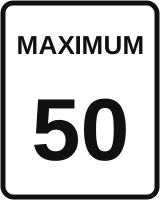
Speed limits are in km/h. In most towns and cities the limit is 50 km/h unless a sign says otherwise, and many residential streets and school zones are 30–40 km/h. Highways are usually 80–100 km/h, and some freeways go up to 110–120 km/h. If your car's speedometer shows mph, remember that 100 km/h is about 62 mph.
Turning right on a red light
You may turn right on a red light after a complete stop, giving way to pedestrians and traffic, unless a sign prohibits it. The big exception is the Island of Montreal, where right turns on red are not allowed at all.
School buses
When a school bus has its red lights flashing (and in most provinces its stop arm out), traffic in both directions must stop, unless the road is divided by a median. Stay well back. Ontario, for example, requires you to stop at least 20 metres behind the bus.
Pedestrians and crosswalks
Give way to pedestrians at crosswalks and intersections. At pedestrian crossovers and school crossings with a crossing guard, Ontario and some other provinces require you to wait until the person has completely crossed the road before you go.
Emergency vehicles: Slow Down, Move Over
When an emergency vehicle approaches with its siren or lights on, pull to the right and stop. Every province has a "Slow Down, Move Over" law for passing stopped emergency vehicles, and many also cover tow trucks and road crews. Slow down, and move over a lane if it's safe to do so.
Phones and alcohol
- Phones: using a hand-held phone or other device while driving is banned in every province and territory. Hands-free use through a mounted device is generally allowed for fully licensed drivers.
- Alcohol and drugs: it is a criminal offence to drive with 80 mg or more of alcohol per 100 ml of blood, or while impaired by drugs including cannabis. Most provinces also suspend licences and impound vehicles from 50 mg. Novice drivers, and in many provinces drivers under 21 or 22, must have zero alcohol.
Winter driving
- Quebec: winter tires are required by law from December 1 to March 15.
- British Columbia: winter tires or chains are required on many designated highways from October 1 to April 30 (some routes end March 31).
- Everywhere: clear all snow and ice from your windows, roof and lights before driving, and keep an emergency kit in the car.
Wildlife
Collisions with moose, deer and elk are a serious danger, especially at dawn and dusk. Watch for yellow wildlife-crossing signs and slow down where they're posted.
Getting a licence
All provinces use graduated licensing. In Ontario, for example, you go from a G1 learner's licence to a G2, then a full G licence, with road tests along the way. Visitors can usually drive on a valid foreign licence for a limited time (often 3–6 months, depending on the province). An International Driving Permit helps if your licence isn't in English or French.
Common road signs
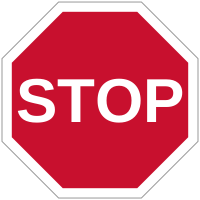
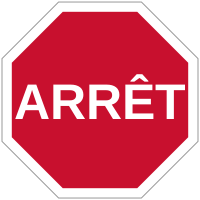
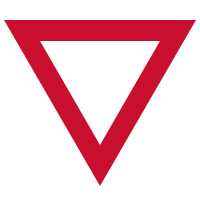
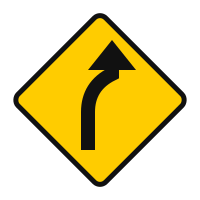
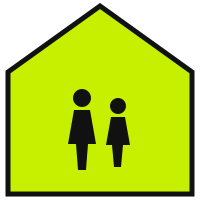
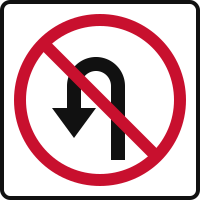
Canadian signs look a lot like US signs: red octagons and triangles for stop and yield, yellow diamonds for warnings, white rectangles for rules. Distances and speeds are metric. In Quebec, signs are in French.

Practice quiz
Pick an answer to see whether you're right and why.
Official sources
- Ontario: Official MTO Driver's Handbook
- British Columbia: ICBC driving guides
- Quebec: SAAQ. Licensing and road safety.
- Transport Canada: road transportation. Federal road safety information.